


For decades, we’ve treated the mouth and the body as if they were two entirely different things. You see a dentist for your teeth and a doctor for your heart, and the two rarely compare notes. However, modern science has made one thing very clear: your mouth is a gateway, not an island. The connection between gum disease and heart health is one of the most significant examples of how preventative dentistry and oral hygiene affects your entire systemic well-being.
The Highway Between Gum Disease and Heart Health
How does a problem in your gums end up affecting your heart? It all comes down to inflammation.
Gum disease, or periodontitis, is a chronic bacterial infection. When your gums are infected, they become a direct highway for bacteria to enter your bloodstream. Once these oral bacteria hitch a ride through your circulatory system, they can cause several issues:
-
-
Arterial Plaque: Bacteria can attach to fatty deposits in the blood vessels, contributing to the “clogging” of arteries (atherosclerosis).
-
Inflammatory Response: The body’s immune response to gum infection increases C-reactive protein, a marker associated with an increased risk of heart disease.
-
Blood Clots: Certain oral bacteria may cause platelets to clump together, potentially leading to blood clots that can trigger a heart attack or stroke.
-
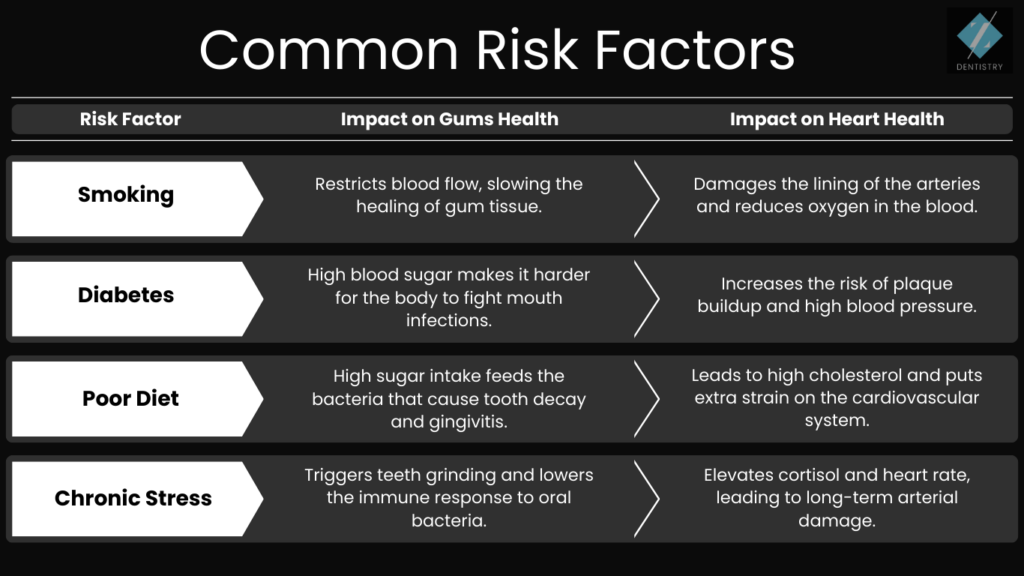
Are You at Risk?
The link between gum disease and heart health is particularly strong because they often share the same risk factors. If you have one, you are statistically more likely to struggle with the other.
Red Flags You Shouldn’t Ignore
Early-stage gum disease (called gingivitis) is often silent, but as it progresses, your body will start sending signals. Protecting your heart starts with recognizing these oral symptoms:
-
Bleeding during brushing or flossing: Healthy gums should never bleed.
-
Persistent bad breath: This often signals a bacterial colony beneath the gum line.
-
Receding gums: If your teeth look “longer,” your gums are pulling away.
-
Tender or swollen gums: This is a clear sign of active inflammation.
A Note for Our Neighbors: If you live in or around Justin, TX, and have a family history of heart disease, your dental cleaning is more than “just a cleaning.” It is a vital part of your dental routine.
3 Simple Steps to Protect Your Gums
-
Upgrade to an Electric Brush: Modern technology has made these more efficient than a manual toothbrush at removing biofilm that triggers inflammation.
-
Don’t Ignore the Bleed: If your gums bleed when you floss, that is an open wound. It’s time for a professional evaluation.
-
Maintain Regular Dental Visits: Professional cleanings remove the hardened tartar (calculus) that you cannot remove at home, effectively “closing the gate” to your bloodstream.
Schedule Your Dental Visit
Taking care of your smile isn’t just about aesthetics; it’s about longevity. By prioritizing your periodontal health, you are quite literally protecting your heart. Schedule your next dental checkup today to keep your smile bright and your heart healthy—your future self will thank you for it!